Honourable Members of Parliament,
Ladies and gentlemen,
Dear Colleagues,
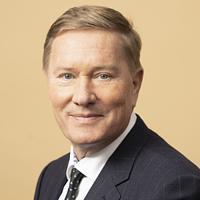
My name is Lars-Christian Brask and, as Deputy Speaker and member of the Presidium of the Danish Parliament, it is my great pleasure to bid you welcome to Denmark and to the COSAC Plenary meeting.
We are honoured to host representatives from across the European Union, from candidate countries and from our close European allies.
Your presence here today is testament to our shared commitment to dialogue, cooperation, and democratic values.
In times marked by uncertainty and division, the importance of safeguarding democracy through parliamentary collaboration has only grown more acute.
Eighty years ago, Hal Koch, one of Denmark’s most influential thinkers on democratic culture, argued that: “It is conversation – dialogue - and its mutual understanding and respect that constitutes the essence of democracy”.
If this fails, he warned, society will inevitably fall back into the struggle for power.
Although Hal Koch and I may not have always shared the same political convictions, I believe his reflections on the significance of conversation and dialogue convey an important truth.
For it is through the exchange of views that we achieve mutual understanding, inspiration, and enlightenment.
Dialogue can serve as the glue that binds Europe together – despite our many different political convictions and differences. Conversely, the absence of it can have the opposite effect.
Fortunately, we are gathered here today to engage in precisely this endeavour. Because, as the Speaker underlined yesterday at the welcoming reception, the COSAC Plenary is not merely a formal gathering; it is a living forum for exchange of views.
Over the next couple of days, I hope the programme will provide an opportunity to inspire and promote dialogue on some of the most pressing challenges facing Europe today.
The guiding themes throughout the agenda are security and strategic autonomy, competitiveness and the green transition. In other words: How we prepare ourselves for tomorrow.
Today’s meeting represents a moment to reflect on the broader questions shaping Europe’s future.
Central to these is the question of how the European Union can continue to support Ukraine’s struggle for freedom, and how we, as a continent, can safeguard a free, democratic and prosperous Europe.
At the core of the question of “how the European Union evolves as a union of nations”, lies enlargement.
Enlargement is not merely a technical process. It is a strategic decision, carrying both opportunities and challenges that will shape Europe’s trajectory for generations to come.
In 2002, the Copenhagen Criteria underlined the necessity of a merit-based approach to enlargement. This remains as relevant today, as it was in 2002.
However, it is not only a matter of ensuring that candidate countries are ready for enlargement. We, as a Union, must also be ready.
We must take a careful look at whether we can improve the way our Union works and we ask ourselves: is European democracy prepared for a Union of more than thirty members? A key issue in this regard will be how we protect fundamental values, not least the rule of law.
We must ensure that Europe’s choices today translate into lasting strength tomorrow. Our ability to adapt, innovate and compete is more crucial than ever. In shifting geopolitical realities, the Union’s competitiveness is therefore both an economic concern and a matter of resilience and strategic positioning.
Sustainable growth and energy supply lie at the heart of this equation.
Clean, affordable, homegrown energy is not only an environmental imperative - it is also a cornerstone of economic resilience and strategic autonomy.
The same logic extends to the green transition of the EU’s agri-food sector. Building a resilient and future-proof European agri-food system is not merely about food security – although this is a crucial part.
It is also about ensuring that innovation and sustainability go hand in hand, so that Europe’s prosperity remains in harmony with the ecosystems and climate on which the sector - and indeed all of us - depend.
In short, over the course of today and tomorrow we shall explore some of the most vital themes and questions shaping Europe today.
Beyond the formal sessions, I hope you will find time to experience the charms of Copenhagen and to join us for tonight’s concert in the Royal Opera House.
Let me conclude by expressing my hope that our discussions will foster mutual understanding, inspire fresh perspectives and reinforce our shared commitment to the future of Europe.
On that note, I would like to thank you for your attention and pass the floor to Ms. Brigitte Klintskov Jerkel, chair of the Danish European Affairs Committee.
Please, Brigitte the floor is yours.