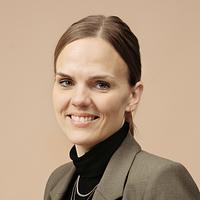
Thank you for the kind introduction.
I am happy to be here today in this historic setting in the “Landstingssal” to talk about open source.
I am happy to be here today in this historic setting in the “Landstingssal” to talk about open source.
Some of you have probably been part of the open source community for many years.
I was appointed Minister for Digital Affairs last summer.
And already I have felt that open source has become a very hot topic within a short period of time.
The past year has featured a number of rude awakenings. And if there were ever any doubts, it is now crystal clear that Europe cannot afford to fall asleep behind the digital steering wheel.
There are two gentlemen to whom we owe special thanks for these awakenings: Mario Draghi and Donald Trump.
Draghi for the report that pulled the rug under our belief that we have things under control in Europe.
And Trump? In his own unique way, Trump has reminded us that the world can change faster than we can update our software.
The conclusion? We need to strengthen our digital sovereignty and we need a stronger European digital market and industry.
Thanks to the increased focus on digital sovereignty, the attention towards open source solutions has also increased.
Today, we question whether the way we have built our digital ecosystem reflects our values and needs.
Much like we historically have questioned how things were done in our society in the past.
Take this room as an example.
This is the former Upper Chamber of the Danish Parliament from when we had a two-chamber political system in Denmark.
The members of the Upper Chamber were appointed by the king or by the upper-class.
They had to be men…. More than 40 years old… And be wealthy landowners….
In other words: The exact opposite of me.
Their role was to act as a conservative counterweight to the more reformistic lower chamber, the “Folketing”.
Cigar shelves with numbered ashtrays were placed outside the Upper Chamber.
And if a break was too short, they could leave their cigars here before entering the room.
The time when the upper-class enjoyed special privileges in our political system is long gone.
And smoking cigars outside the Upper Chamber is left in the past.
Today, we have one chamber – the Folketing – and the members are appointed by the people.
And this room is only used for conferences and meetings like this one today.
This history lesson serves as an example that over time some institutions do develop and even break.
200 years ago, most people didn’t question the fact that few powerful and privileged men ruled the country.
And they did not foresee a time where cigar shelfs would be useless.
Or a young woman could be minister.
Things can change, when we start asking questions.
Today, we question whether a few dominant tech-companies should be allowed to define our digital society.
Does their business model compare to the cigar shelfs you can find outside this room? Outdated? Unwanted?
Many point to the fact that open source can contribute to un-lock the European over-reliance on non-European big tech.
But I doubt I need to convince you about the upsides of open source 😊
Open source solutions are already used in many parts of the Danish public sector today.
I believe you will be presented to some cases later today.
One thing I have learned in a short period of time is that there are many myths around open source. And a tendency to be either for or against.
To me it is much more interesting to ask: How and where?
To test how transitioning to open source solutions works in practice, some employees in my ministry have participated in a small-scale pilot test using an open source alternative to Microsoft Office during this summer.
And as some of you may have noticed, this experiment received a lot of attention in the media.
Both in Denmark and abroad.
Although it was just a small pilot it shows that we are starting to take open source alternatives seriously.
And I do expect more experiments in the coming years.
Because I believe we have to strengthen Denmark’s and Europe’s digital sovereignty.
We need to define the next steps to take in the short and long term.
In August, the Danish Government allocated money towards this goal.
And we also need to work together in the EU. To increase competitiveness. To foster alternatives.
Increasing our digital sovereignty does not mean a future without big tech.
Instead, it entails that we have genuine freedom to choose between products and services.
To leave the digital cigar shelfs in the past.
Thank you for your time. I hope you will enjoy the rest of the day.